
Solar Panels and EV Chargers in Leisure Village: What the HOA Allows
By Tricia Garcia, Senior Real Estate & Inherited Home Specialist | Real Estate Toolbox
THE SHORT ANSWER
Yes, you can add solar panels or an electric car charger to a Leisure Village home, but not on your own schedule. Both are exterior changes, so the Association’s Architectural Committee has to approve them on an Architectural Permit before any work starts. California law backs you up: an HOA can set reasonable conditions, but it can’t flatly ban rooftop solar or a charger in your own parking space. Once it’s installed, the solar system is yours to maintain and insure, even though the Association takes care of the roof underneath it. Below is everything to know about Leisure Village solar panels and EV chargers, from the permit to the day you sell.
Camarillo gets a lot of sun. So it makes sense that people who own a Leisure Village home, or are thinking about buying one, start wondering about solar panels. And with more electric cars on the road, the next question is usually about plugging one in at home.
Both are possible here. But Leisure Village is an HOA community, and anything that changes the outside of your home goes through the Association first. Add California’s solar and charger laws on top of that, and the rules can feel confusing.
So let me walk you through it the way I’d explain it at your kitchen table. What needs approval, what the law protects, who takes care of what, and what to think about if you plan to sell someday.
Step One Is Always the Architectural Permit
Leisure Village’s Rules and Regulations (Update November 2025) say Architectural Committee approval is required before you make any exterior change to the structures or plantings on your lot. Rule 6.08 adds that antennas and other devices need prior approval too, and that the Committee may set conditions as the law allows.
In practice, that means an Architectural Permit Application, available on the Association’s forms page. Here is how it works, based on the rules and the current form (revised July 13, 2026):
- ✓You fill out the application with your contractor’s name, license number, and a detailed description of the project. The rules ask for complete construction details.
- ✓Work can’t start until the Architectural Committee chairperson signs the permit. A representative of the company doing the work picks up the approved permit.
- ✓Construction has to start within 60 days of approval, or the permit can be canceled. The form says the permit expires in 60 days unless the chairperson extends it.
- ✓A copy of the permit has to be posted at the job site, visible from the front of the house.
- ✓When the project is done, you call the Leisure Village compliance inspector at 805-484-2861. The Association may inspect exterior work.
The form has a special line for solar. By signing, the homeowner agrees that repairing any damage to their own home or the home next door caused by installing solar panels and components is their sole responsibility. Read that line twice before you sign it, and make sure your installer carries the right insurance.
Skipping the permit is expensive. Rule 6.17 sets a fine of $100 per business day when work that needs a permit starts without one, and another $100 per business day if permitted work isn’t finished before the permit expires. My post on Leisure Village remodeling rules covers the full permit process for other projects.
What California Law Says About Solar in an HOA
California wants homeowners to be able to go solar, and it says so in the law. Civil Code section 714 makes any HOA rule that prohibits or restricts a solar energy system in practice void, while still allowing reasonable restrictions.
What counts as reasonable? For a solar electric system, a restriction can’t add more than $1,000 to the cost of the system as you proposed it, or cut its performance by more than 10 percent. The Association also has to process your request the same way it handles any architectural change, give its approval or denial in writing, and not drag its feet. If it doesn’t deny the request in writing within 45 days, the request is deemed approved, unless the delay comes from a reasonable request for more information.
Civil Code section 714.1 gives the Association some room too. It can set reasonable rules for roof maintenance and replacement, require installers to cover damage they cause, and require approval when a system would sit on a home owned by someone else. But it can’t adopt a general policy banning rooftop solar on the building you live in, and it can’t make you win a vote of the membership to install it.
If your Leisure Village home shares a wall or a roofline with a neighbor’s, expect the Committee to look carefully at where the panels go and how the work affects the home next door.
Who Takes Care of Leisure Village Solar Panels After They Go Up
This is the part I want every owner to understand before they sign a solar contract. The Association’s Maintenance Responsibility Matrix splits the duties like this:
| Item | Who maintains, repairs, and replaces it |
|---|---|
| Roofs (shingles and underlayment) | The Association |
| Solar panels | The owner |
| Solar tubes | The owner |
| Electrical wiring and components serving a single lot | The owner |
| Additions an owner makes to the home | The owner (Rule 6.03 and CC&Rs section 9.2) |
So the roof is the Association’s job, but the panels sitting on it are yours. Rule 6.03 says owners who make alterations and additions are responsible for all maintenance and repairs of the installation. And the CC&Rs language quoted in the rules says the Association’s exterior work doesn’t cover additions made by or for owners.
Here’s the question I’d ask before you sign anything. When is the Association due to work on my roof? If roof work is coming up, your panels may need to come off and go back on. The rules I read don’t spell out who pays for that step, so ask the Association office in writing and keep the answer with your permit. My post on who fixes what in Leisure Village goes through the rest of the matrix, and my Leisure Village insurance post explains how the Association’s coverage and yours fit together.
EV Chargers: Your Garage or Carport
Electric car chargers have their own law. Civil Code section 4745, updated by SB 770 effective January 1, 2026, voids HOA rules that block or unreasonably restrict a charging station in an owner’s unit or designated parking space. Reasonable restrictions are still allowed, as long as they don’t add a significant amount to the cost or cut the charger’s performance.
The process mirrors solar. The Association handles your request like any architectural change, puts its decision in writing, and if it doesn’t deny the request in writing within 60 days, it’s deemed approved (unless it reasonably asked for more information).
If the charger would go in a common area or an exclusive use common area, the law adds more steps. You agree in writing to follow the Association’s architectural standards, use a licensed contractor, pay for the installation and the electricity, and give the Association a certificate of liability insurance within 14 days of approval, then every year after. You’d also be responsible for damage the charger causes and for disclosing it to a future buyer.
A few practical notes for Leisure Village. Some models come with a two-car garage and others have different parking setups, so where a charger can go depends on your home. The wiring that serves your lot is the owner’s responsibility under the matrix. And the rules for holiday lights already say no electrical cords on or across driveways and sidewalks, so I’d never run a charging cord that way either. Golf carts and low speed electric vehicles need a Leisure Village decal, which my post on Leisure Village parking and RV rules explains.
Your Solar or Charger Checklist
- ✓Ask the Association office about your roof’s age and any roof work on the schedule.
- ✓Get the Architectural Permit Application from the Association’s forms page.
- ✓Hire a contractor licensed with the Contractors State License Board. The form notes that any business doing work worth more than $1,000 needs a state license.
- ✓Ask your installer which City of Camarillo permits the project needs.
- ✓Confirm your installer’s insurance before work starts.
- ✓Wait for the chairperson’s signature. Don’t let anyone start early.
- ✓Post the permit where it can be seen from the front of the house.
- ✓Call the compliance inspector at 805-484-2861 when the job is done.
- ✓Keep every permit, warranty, contract, and sign-off in one folder.
Tax credit rules for solar and chargers have changed in recent years, so before you count on any credit, ask your CPA what applies to you.
Selling a Home With Leisure Village Solar Panels
If you already have solar, or you’re selling a parent’s home that does, the panels become part of the sale. Buyers and their lenders will want to know whether the system is owned outright, financed, or leased.
An owned system is the simplest. A financed or leased system may come with paperwork the buyer has to take over, or a balance that has to be handled in escrow, and the solar company may have its own steps and timeline. Tell your agent and escrow about it on day one, not in week three.
It also belongs in your disclosures. My post on Leisure Village seller disclosures explains what California sellers hand the buyer, and the permit folder from the checklist above makes that part much easier. If you’re weighing whether the house is worth upgrading before a sale at all, my guide to costly Leisure Village selling mistakes is a good place to start. Talk to us before you spend money, and we’ll tell you what’s worth it.
How My Team Helps
Steve and I don’t install solar or chargers, and we don’t give legal advice on HOA disputes. What we do is help Leisure Village owners and families understand the rules before they spend money, and help sellers gather the solar paperwork buyers will ask for. If you need an installer, an electrician, or an attorney, we can connect you with pros, and you choose who to hire.
Know your options before you decide.
This post is general information based on the Leisure Village Rules and Regulations (Update November 2025), the Association’s Architectural Permit Application (revised 07/13/2026), and California Civil Code sections 714, 714.1, and 4745 as I read them in November 2026. Rules and laws change, and the Association’s governing documents control. I’m a Realtor, not an attorney or tax advisor, and this isn’t legal or tax advice. Please confirm details with the Leisure Village Association, and talk with an attorney or CPA about your own situation.
Frequently Asked Questions
Can I put solar panels on my Leisure Village home?
Yes, with approval first. Leisure Village requires an Architectural Permit, signed by the Architectural Committee chairperson, before any exterior change, and that includes solar. California Civil Code section 714 says an HOA can set reasonable restrictions on solar but can’t use its rules to block it.
Who maintains the roof if I add solar in Leisure Village?
The Association’s Maintenance Responsibility Matrix lists roofs (shingles and underlayment) as an Association duty, and lists solar panels and solar tubes as the owner’s duty. The Architectural Permit also says the owner is responsible for any damage to their home or the home next door caused by installing solar. Ask the Association in writing how panels are handled when roof work is due.
Can I install an EV charger in my Leisure Village garage?
You can ask for one, and California Civil Code section 4745 protects your right to a charger in your own home or designated parking space, subject to reasonable restrictions. Because it changes your home, get the Association’s approval on an Architectural Permit first, use a licensed contractor, and check with the City of Camarillo about a building permit.
How long does the HOA have to answer a solar or EV charger request?
Under California law, the decision has to be in writing. A solar application not denied in writing within 45 days is deemed approved, and an EV charger application not denied in writing within 60 days is deemed approved. Either clock pauses if the Association reasonably asks for more information.
What happens to my solar panels when I sell my Leisure Village home?
They’re part of the sale, so plan for them early. Gather the Architectural Permit, City permit and final sign-off, warranties, and any lease or loan papers. If the system is leased or financed, the company may have its own transfer steps, and escrow needs to know about it from day one.
Thinking About Buying or Selling in Leisure Village?
Let’s talk it through before you sign a solar contract.
Have questions, real ones, specific ones? Reach out to my team and me directly. You can also book a free 30-minute call.
Tricia Garcia & Steve Hise
Senior Real Estate & Inherited Home Specialist
805-424-6226
team@RealEstateToolbox.com
leisurevillagelife.com | realestatetoolbox.com
Real Estate Toolbox | eXp Realty | DRE #02032007
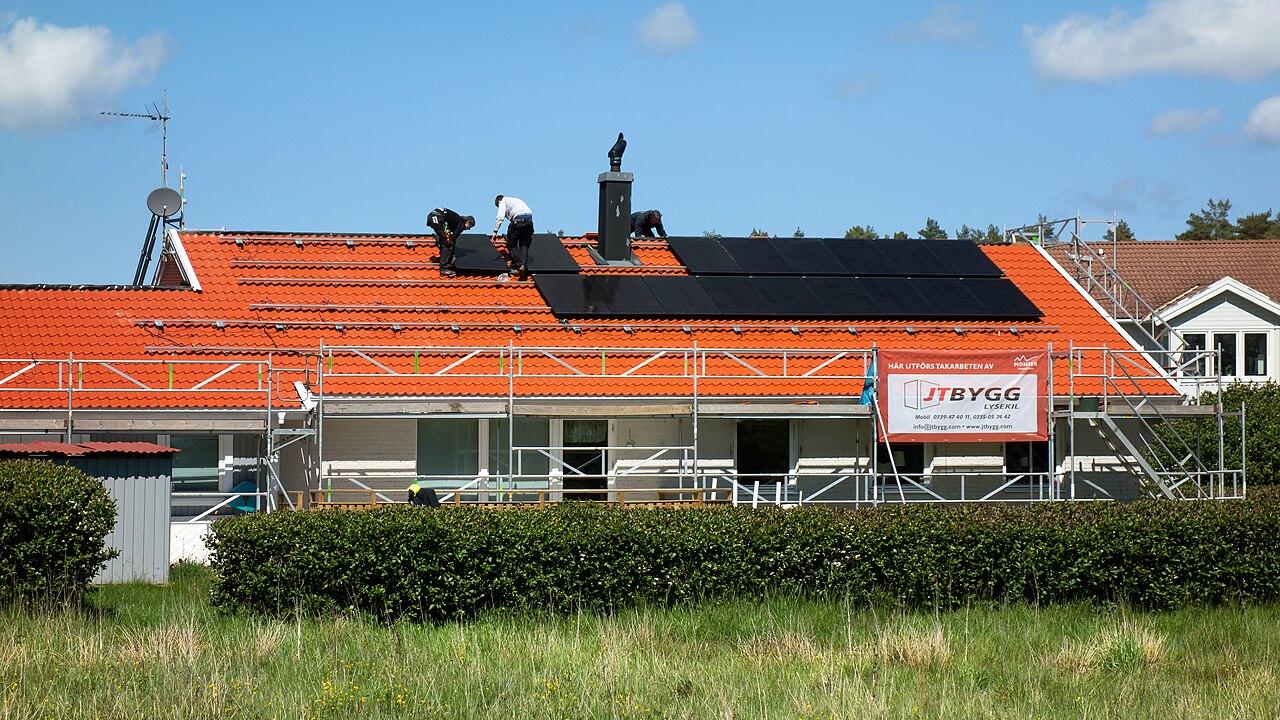
Featured photo: installers in Brastad, Sweden, by W.carter on Wikimedia Commons (CC0). It is not a Leisure Village home.