
Your Kids Don’t Want Your Stuff? Here’s What’s Worth Money Before You Clear Out the House
By Tricia Garcia, Senior Real Estate & Inherited Home Specialist | Real Estate Toolbox
THE SHORT ANSWER
Your kids don’t want your stuff, and that’s okay. But unwanted isn’t the same as worthless. Before you donate, sell, or throw away anything, walk the house as a family, tag what you’re keeping, and have an estate sale professional look first. Clothing and small everyday items can add up to about one third of an estate sale, mid-century modern furniture is often the most valuable furniture in the home, and the car and big items are what bring buyers through the door. And keep the order straight: in most families, the house itself is the biggest asset.
You’ve saved the good china for forty years. The dining room set. The crystal from your wedding. Maybe you’ve even told the kids, “Someday, all of this will be yours.” And then one of them finally says it, as kindly as they can: “We don’t want any of it.”
They’re probably right. Your kids don’t want your stuff. But some of the most valuable things in your home are the ones you’d never look at twice, and families give them away every single day.
So I sat down with Melanie, owner of Melanie Halstead Estate Sales Co. in Simi Valley, at one of her sales. She’s an estate sale pro I trust and refer families to. My team and I don’t run estate sales ourselves. We connect families with people like Melanie and help schedule them, or hand over the contacts, whichever the family prefers. I asked her the questions most people are afraid to ask. What’s worth money? What should you never throw away? And what do you do when the kids say, no thanks?
This one is personal for me. I sold the home of the grandmother who raised me, and more recently my grandparents’ home after they passed. I’ve stood in those rooms, full of a lifetime of things, not knowing where to start.
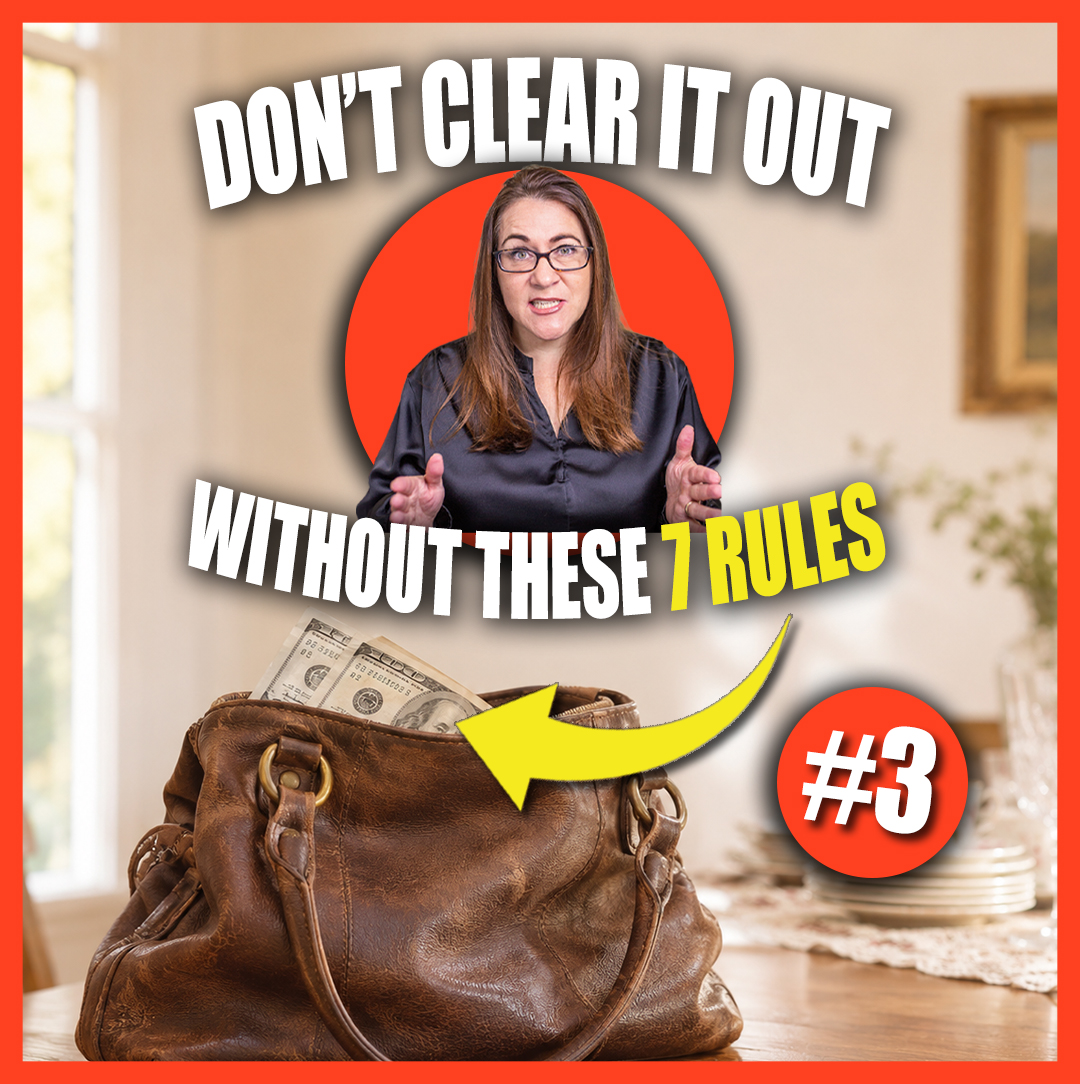
Here are the 7 Clear-Out Rules from our conversation, in the order I’d use them.
The 7 Clear-Out Rules at a Glance
| Rule | What to do |
|---|---|
| 1. Before you throw anything away | Walk the house together and tag what the family is keeping |
| 2. What not to throw away | Hold the clothing, dishes and small items until a pro sorts them |
| 3. Valuables hiding in your home | Get the right eyes on art, jewelry and vintage pieces before you sell them yourself |
| 4. When the kids don’t want it | Don’t hold it for them, and decide while you’re the one deciding |
| 5. The biggest estate sale mistake | Don’t sell the car and big-ticket items before the sale |
| 6. Emptying a house in 30 days | Call a pro right away and expect a service, not a payday |
| 7. When siblings disagree | Pick one point person before anything leaves the house |
Rule 1. Walk the House Before You Throw Anything Away
I asked Melanie what a family should do first, before a single thing leaves the house. Her answer was to check in with the estate sale person, and before that, decide as a family what matters to you. Personal memorabilia. The things you’re keeping. And if it’s a large piece, like a grandfather clock, tag it, so that when the estate sale team walks through, they know exactly what will be for sale.
Here’s what I mean by that. Before anyone touches a box, walk the house together. Decide what the family is keeping, and put a sticky note on the big pieces. It takes one afternoon, and it saves a lot of arguments later.
We did a version of this with my grandmother’s house. She had put little pieces of paper with family members’ names on a few things she wanted them to have. For everything else, “we took pictures and shared them with all of the family so that everyone had a chance to choose something meaningful.” With more than 25 grandchildren and great-grandchildren spread from California to Oklahoma, that one step kept the peace.
If you’re downsizing yourself, my decluttering guide walks through the house one room at a time.
Rule 2. Don’t Bag Up the Clothes for Goodwill Yet
I asked Melanie what she sees families throw away that they should hold onto. She said the china, the dishes, and clothing. Her answer about clothing surprised me.
People look at Mom’s closet, decide it isn’t their taste, and want to feel good about donating it. Her advice: “Don’t do that. If the priority is the estate, let me come and take a look at it first.”
Her team sorts it, so you don’t have to. Heavily worn items can still be donated. Pieces with the price tags still on will sell, even if they look common. And then she said the line that stopped me: “A third of what goes into an estate sale is all those tiny, small, miscellaneous things that add up.”
Think about that. One third of the sale, and it’s the stuff families give away first because it doesn’t look like much. If you want to sort, sort for what you’re keeping. Don’t sort to throw it out.
Rule 3. Find the Valuables Hiding in Your Home
You may not know what’s in there. I asked Melanie about the most unexpected things she’s found, and she had two stories I can’t stop thinking about.
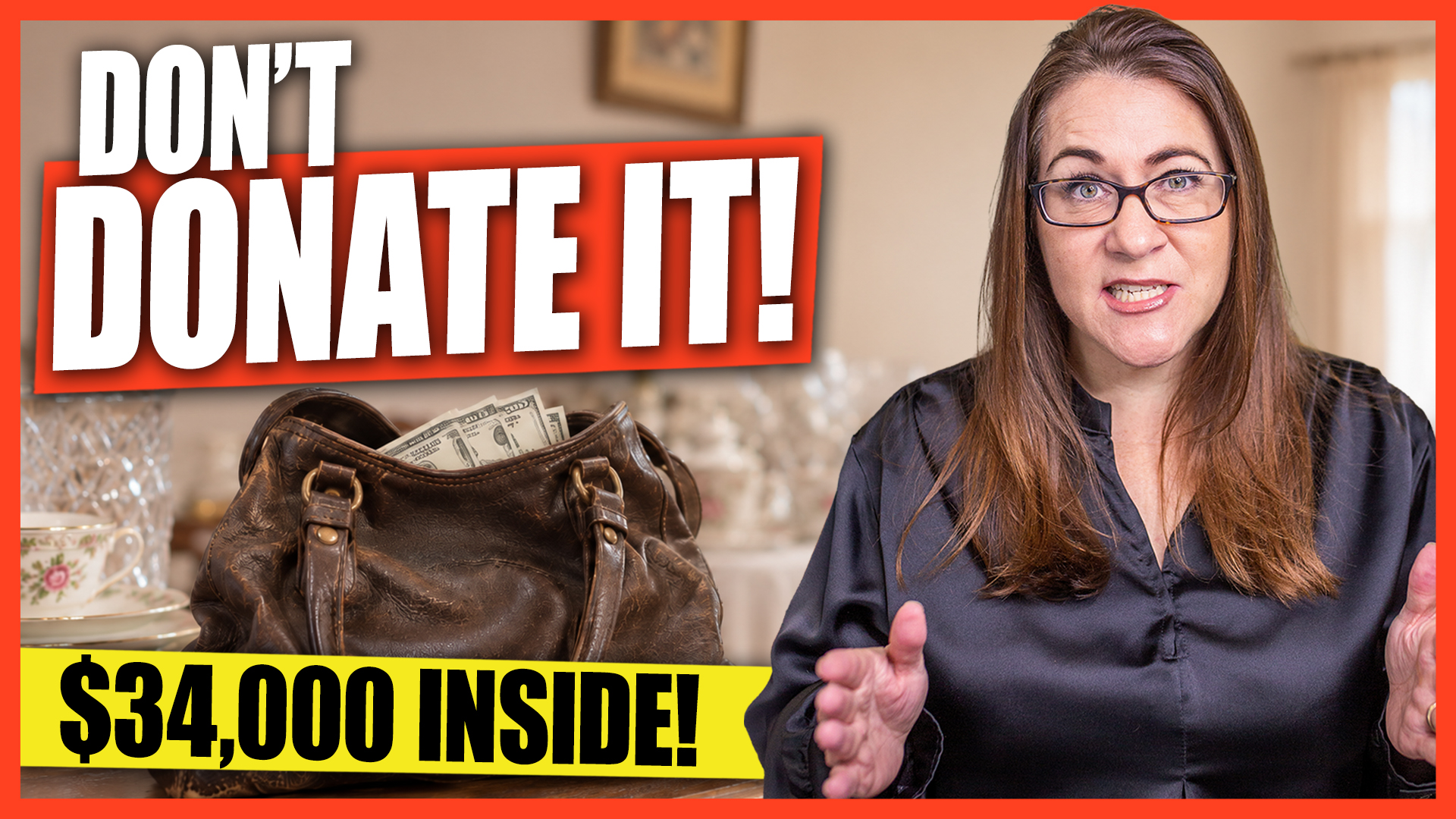
The first was cash. A family had been searching their mother’s house for months for money she swore she’d hidden. First it was $34,000, then maybe $3,400. They were hesitant to tell Melanie, but once they did, she found it in 24 hours. It was $34,000 in hundred-dollar bills, inside Mom’s old, beat-up, favorite purse. The kind of purse that goes into a donation bag without a second look.
The second was a Picasso. Not a painting. A ceramic piece, signed and numbered, with the proper stamp and seal on the bottom, sitting in a client’s dining room cabinet. The client had inherited it about 22 years earlier. In Melanie’s words, the client said, “My kids don’t want this stuff. I want to thin out my house.”
Melanie brought in the art specialist she works with, who priced it by looking at comparable sales, the same way I look at comparable home sales. Her specialist priced it between $30,000 and $45,000. It sold for $28,000 to a private buyer in Minnesota, who put half down, came in to inspect it, and paid the balance.
Let me do the math out loud. Picture that same piece in a box headed to a thrift store. Maybe it sells for $20. That’s a $27,980 mistake sitting on one dining room shelf.
And notice how she sold it. She marketed it across the whole country, the same way I market a home. When you’re selling something valuable, local isn’t enough. So if you think something might be worth money, don’t look it up online and sell it yourself. Get the right eyes on it first. Melanie said jewelry and vintage pieces are where these surprises happen most.
Rule 4. When Your Kids Don’t Want Your Stuff, Don’t Hold It for Them
Melanie laughed when I brought this one up. “My kids don’t want my stuff, and I got some cool stuff!”
Here’s what she sees in house after house. Mid-century modern furniture, which is often the oldest furniture you own, is in most cases the most valuable furniture in the home. And the kids don’t want it. She also sells cars, motorcycles and trailers, even as a single item, which matters when Mom and Dad have moved to a care facility and aren’t driving anymore.
Her first visit is free. She walks through, decides with you what has value and what doesn’t, and tells you whether there’s enough in the estate for a sale to make sense. If there isn’t, she’ll tell you that too.
Her best advice was to get ahead of it, so you get to make the choices about your things before it turns into a situation where you have to get rid of them.
I agree with her. The best time to make these decisions is now, while you’re the one making them. Once there’s a deadline, like a move to assisted living, a probate timeline, or a house sitting empty, the choices get smaller and more expensive. And someone else may end up making them for you. If you’re weighing a move, read this before you downsize, and look at the downsizing regrets families tell me about most.
Rule 5. Don’t Sell the Big Things First
This is the biggest estate sale mistake I asked Melanie about, and it costs families real money.
Families think they’re helping by selling off the things with value before the sale. Melanie’s example was taking the car to Carvana because it’s easy to get a price. When you do that, you’ve lowered the value of the estate, and you’ve taken away what brings people through the door. Cars and big items draw buyers in, and those buyers pick up the small things too.
Once she’s under contract, her job is to come in, organize, evaluate, price, photograph, market, run a two-day sale if the estate merits it, and wrap it up. If you sell the big-ticket items yourself, chances are you sold them for less than she could have.
One more surprise from her: big furniture is the hardest thing to sell. The only furniture she sees flying out the door right now is mid-century modern.
I see the same thing on the real estate side. The car, the good tools, the one great piece of furniture: those are what bring people through the door. Sell them off early and you shrink the whole sale. It feels like you’re helping. You’re not. Let the professional run it.
Rule 6. How to Empty an Inherited House in 30 Days
Melanie said people often call wanting it done yesterday. Mom and Dad are moving into care, the care costs are high, and there’s still a mortgage on the house. Doing it well takes time, but if you’re in that pinch, her first step is simple to say: call someone in immediately.
Her second point was about expectations. In most cases an estate sale is a service, not a big money return. Families sometimes think they’re going to get rich here. What a good sale does is clear the home, put Mom and Dad’s things in the hands of people who will love them, and offset what you’d have paid a crew to haul it all to a dumpster.
Then she said the thing that matters most. The big value is the real estate.
In Ventura and Los Angeles County, that’s often hundreds of thousands of dollars, sometimes more than a million. The contents help, but the home is where a mistake costs the most. So the order matters. Clear the house the right way, then prepare and price the home the right way. If you’ve inherited the home, start with your first 30 days after inheriting a home and the mistakes families make selling an inherited home. For the court side of an estate, the California Courts probate self-help pages are a good place to read, and an estate attorney can tell you what applies to your family.
Rule 7. When Siblings Disagree, Pick One Point Person
“Families are complicated,” Melanie said, and she’s right. There’s usually one who doesn’t want to go with the flow.
When she first comes to look at a house, she asks who the decision makers are, and they have to be at that first meeting. Usually there’s one executor, and that person becomes her point person for everything, start to finish, including dealing with the siblings who may or may not agree.
This is where it gets tricky. Pick one point person before anything leaves the house. Because if siblings can’t agree on what to do with Mom’s dishes, they usually won’t agree on what to do with the house either. And a fight over the house can cost the whole family thousands. I wrote more about that in inheriting a house with siblings. If the disagreement is about who has the legal right to decide, that’s a question for an estate attorney.
Clearing Out a Leisure Village Home
If the house is in Leisure Village in Camarillo, there’s one more layer. The community has its own rules about things like dumpsters, PODs and moving trucks, and the Association’s rules don’t include a section on estate sales, so call the Association Office before you plan one. I put what families need to know in clearing out a parent’s Leisure Village home.
And if you’re the one moving into Leisure Village from a bigger house, these rules work in reverse. Decide what fits your new home first, then let a pro help with the rest. My guide to downsizing to Leisure Village walks through it.
Once the House Is Cleared Out
The contents matter, but the house is where the biggest decisions are. Once it’s empty, the next question is what buyers notice the moment they walk in. Start with 10 things that scare buyers away, then 10 more things scaring buyers. When you’re ready to talk price, I’ll bring recent comparable sales and guide you through what they mean for your home, so you know its true value and your options.
Frequently Asked Questions
What should I do before an estate sale?
Walk the house with your family first. Decide what each person is keeping and tag the big pieces, so nothing gets sold or donated by mistake.
What household items are worth money at an estate sale?
Mid-century modern furniture is often the most valuable furniture in the home. Clothing, accessories and small everyday items can add up to about one third of an estate sale. Art, ceramics, jewelry and collectibles can be worth far more than they look, so have a professional review them before anything is donated.
Should I sell the car or big items before the estate sale?
Usually no. Cars, tools and big-ticket items bring buyers through the door. Selling them early often gets you less money and makes the whole sale smaller.
What do I do if my kids don’t want my things?
Don’t hold onto things for them. Have an estate sale professional walk through your home, tell you what has value, and help you sell it while you’re the one making the decisions.
How fast can you empty an inherited house?
It can be done in about 30 days if you call an estate sale professional right away. Expect it to be a service more than a big payday. In most families, the house itself is the biggest asset.
Who decides when siblings disagree over a parent’s belongings?
Pick one point person, usually the executor or trustee, to make the calls and work with the estate sale company. It keeps the peace and keeps the sale moving. Questions about who has the legal authority belong with an estate attorney.
Not sure where to start? Let’s talk it through.
Have questions, real ones, specific ones? Reach out to my team and me directly, or book a free 30-minute call. We’ll talk through what comes first: the contents, the timing, and the home. And I’ll connect you with the right people, so you’re not figuring this out alone.
Want a clear step-by-step roadmap? Get my free guide for senior sellers.
Outside Ventura or Los Angeles County? We work with a trusted nationwide network of real estate professionals, and I’d be happy to connect you with the right person in your area.
Tricia Garcia & Steve Hise
Senior Real Estate & Inherited Home Specialist
805-424-6226
team@RealEstateToolbox.com
leisurevillagelife.com | realestatetoolbox.com
Real Estate Toolbox | DRE #02032007
This article is general information, not legal, tax or financial advice. For probate, trust or tax questions, talk with an estate attorney or CPA about your own situation.