
Termites in Leisure Village: Who Pays, the Termite Permit, and Selling Your Home
By Tricia Garcia, Senior Real Estate & Inherited Home Specialist | Real Estate Toolbox
THE SHORT ANSWER
In Leisure Village, termites are the owner’s responsibility. The Association’s Responsibility Matrix puts termite and wood destroying pest treatment, and the damage they cause to wood surfaces, on the owner, and the monthly HOA dues don’t cover termite correction. Before any termite work starts, the owner needs the Association’s Termite & Other Wood Destroying Organisms Permit, with the inspection report attached. When you sell, who pays for termite work is something the buyer and seller agree on in the contract.
Nobody wants to hear the word “termites” in the middle of a sale. But in California it comes up all the time, and in Leisure Village there’s an extra question on top of it: is this the HOA’s problem or mine?
Families ask me this a lot, especially when they’re getting a parent’s home ready to sell. So here’s how it works, in plain words, using the Association’s own Responsibility Matrix, its termite permit form, and California’s rules for termite inspections.
Who Pays for Termites in Leisure Village?
The owner does. The Association’s Responsibility Matrix has a line for “Termite/wood destroying pest eradication and resulting damage/all wood surfaces,” and the only box checked is the owner’s. The Association’s dues page says the same thing another way: termite correction isn’t included in the monthly HOA dues.
That surprises people, because the Association does take care of a lot of the outside of the home. Here’s how the matrix splits it.
| Item | Who handles it | What the matrix says |
|---|---|---|
| Termite and wood destroying pest treatment | Owner | Eradication and the resulting damage to all wood surfaces are the owner’s duty. |
| Exterior wood trim (planter ledges, fascia, eaves) | Association, unless pests caused it | The Association covers exterior wood trim, original stucco, and dry rot. If termites or wood destroying pests caused the damage, the owner repairs or replaces it. |
| Patio roofs, enclosures, and covers | Owner | Owner’s duty to maintain, repair, and replace. |
| Owner improvements (like patio enclosures) | Owner | Owner’s duty, covered by the owner’s insurance column. |
| Roofs (shingles and underlayment) | Association | The Association maintains, repairs, and replaces roofs. |
The middle row is the one that trips people up. Rotted fascia board might be the Association’s job, or yours. It depends on what caused it. If the inspector finds termite damage, the repair is yours. My post on who fixes what in Leisure Village goes through the rest of the matrix.
The Leisure Village Termite Permit, Step by Step
Leisure Village has its own form for this: the Termite & Other Wood Destroying Organisms Permit Application. You’ll find it on the Association’s forms page. Here’s what the form asks for and what it says.
- ✓Get an inspection first. The form says to attach the inspection report to the permit.
- ✓Fill in the owner’s name, Village address, and model name, plus the contractor’s name, phone, address, and license number.
- ✓Sign the conditions. The owner holds the Association harmless for the work and accepts responsibility for maintaining it. The sprinkler system, trees, and shrubs can’t be changed without further Association approval.
- ✓Wait for the signature. Work can’t start until the Association signs the permit.
- ✓Post the permit. A copy has to be displayed at the job site.
- ✓Finish within 60 days. The permit expires in 60 days unless the Association extends it.
- ✓Call the Association Office at (805) 484-2861 when the work is done, so the compliance inspector can do the final inspection.
The form also recommends getting any City of Camarillo building permits the work needs, and it reminds owners that a business doing more than $1,000 of work (labor and materials) has to be licensed with the Contractors State License Board.
One more detail I like to point out. The Association-use section of the form has three boxes. “Treatment only, no structural repair” is marked no charge to the homeowner. “Treatment with structural repair” says the Architectural Permit fee applies. And structural repair with dry rot or fungus damage gets sent to Residential Services. So if your report calls for wood repair, plan for the Architectural Permit too. My post on Leisure Village remodeling rules explains how that permit works.
What a California Termite Inspection Covers
In California, termite inspections are regulated by the Structural Pest Control Board. Under Business and Professions Code section 8516, the inspection has to be done by a licensed Branch 3 field representative or operator who works for a registered company, and the report has to be delivered before any work starts.
The report sorts what the inspector finds into two groups. The first is infestation or infection that’s evident. The second is conditions likely to lead to it, and the law gives examples like earth-wood contact, too much cellulose debris, poor grading, excess moisture, roof leaks, and poor ventilation. In real estate, you’ll hear these called “Section 1” and “Section 2.”
| Report group | What it means | How it usually comes up in a sale |
|---|---|---|
| Section 1 | Active termites, wood destroying pests, or fungus the inspector can see. | This is the part buyers and lenders pay the most attention to. |
| Section 2 | Conditions that could lead to a problem later, like moisture or wood touching soil. | Often treated as maintenance items. Buyer and seller decide what gets done. |
| Inaccessible areas | Places the inspector couldn’t reach. | The report should list them and recommend further inspection where practical. |
Here’s a helpful tool most people don’t know about. The Structural Pest Control Board lets you search whether a property has been inspected within the last two years, and you can request copies of those reports in writing.
Termites When You Sell a Leisure Village Home
In California, there’s no single rule for who pays for termite work in a sale. The buyer and seller agree on it in the purchase contract. The seller might do the Section 1 work before closing, or the two sides might adjust the price instead, and some buyers take the home as it is. It depends on the report and the deal.
What I tell sellers is simple: know before the buyer does. A termite inspection early in the process gives you time to get bids, pull the Association permit, and decide what you’ll fix. In Leisure Village that matters even more, because the permit has to be signed before work starts, and an escrow clock doesn’t wait for paperwork.
Many Leisure Village homes share walls. The Association describes duplex, triplex, and quadplex designs as well as standalone homes. If your home is attached, ask your pest company and the Association Office how the work will affect the home next door before you schedule it.
If you’re getting a parent’s home ready and you’d rather not fix much, my post on selling a house as is walks through that choice. And 7 costly mistakes when selling a Leisure Village home covers the other surprises that cost sellers money.
If You’re Buying in Leisure Village
Read the whole report, not only the summary page. Look at what’s in Section 1, what’s in Section 2, and which areas the inspector couldn’t reach. Then ask who’s paying for what before you remove your contingencies. And ask your lender whether your loan has its own termite requirements.
After you close, termites are yours to watch for, along with the rest of the owner items on the matrix. My posts on what to expect buying a home in Leisure Village and Leisure Village insurance are good next reads.
A Termite Checklist for Leisure Village Owners
- ✓Check the Structural Pest Control Board search to see if the home was inspected in the last two years.
- ✓Hire a registered company with a licensed Branch 3 inspector.
- ✓Read Section 1, Section 2, and the inaccessible areas on the report.
- ✓Pull the Leisure Village termite permit and attach the report before any work starts.
- ✓Add an Architectural Permit if the work includes structural wood repair.
- ✓If your home shares a wall, ask how the work affects the neighbor.
- ✓Call the Association Office at (805) 484-2861 when the work is finished.
- ✓Keep the report, permit, and completion paperwork for your sale file.
Why This Matters in Leisure Village
Leisure Village homes were built from 1973 to 1984, and the matrix lists plenty of wood on them, from fascia and eaves to patio covers and enclosures. A termite report is a normal part of selling a California home. Knowing that it’s an owner item here, and that the Association has its own permit, keeps a routine report from turning into a stressful week in escrow. Know your options before you decide, and take it one step at a time.
This post is general information based on the Leisure Village Association’s Responsibility Matrix, its Termite & Other Wood Destroying Organisms Permit Application (Rev. 02/10/2025), its dues page, California Business and Professions Code section 8516, and the Structural Pest Control Board website. Rules and fees can change, so please confirm the current version with the Association Office. I’m a Realtor, not a pest control operator or an attorney. For questions about your inspection report, talk with a licensed pest control company, and for contract or legal questions, talk with a real estate attorney.
Frequently Asked Questions
Does the Leisure Village HOA pay for termites?
No. The Association’s Responsibility Matrix lists termite and wood destroying pest eradication, and the resulting damage to all wood surfaces, as the owner’s duty. The Association’s dues page also lists termite correction as not included in the monthly dues.
Who fixes dry rot in Leisure Village?
The matrix puts exterior wood trim (such as planter ledges, fascia, and eaves), original stucco, and dry rot on the Association. But it adds that if termites or wood destroying pests caused the damage, the owner repairs or replaces it. So the cause of the damage decides who pays.
Do I need a permit for termite treatment in Leisure Village?
Yes. The Association has a Termite & Other Wood Destroying Organisms Permit Application. You attach the inspection report, and work can’t start until the Association signs the permit. The permit expires in 60 days unless the Association extends it, and a copy has to be displayed at the job site.
Is there a fee for the Leisure Village termite permit?
The form’s Association-use section marks “Treatment Only. No structural repair.” as no charge to the homeowner. Treatment with structural repair says the Architectural Permit fee applies. Call the Association Office at (805) 484-2861 to confirm the current fee for your project.
Who pays for termite work when you sell a home in California?
There’s no single rule. The buyer and seller agree on it in the purchase contract, and it’s often part of the negotiation after the inspection report comes back. Talk with your agent about what’s typical for your sale.
What is the difference between Section 1 and Section 2 on a termite report?
California law requires the inspection report to separate the infestation or infection that is evident from the conditions likely to lead to one, such as earth-wood contact, excess moisture, or roof leaks. These are often called Section 1 and Section 2 items. Section 1 is the active problem. Section 2 is a condition that could become one.
Can I find out if a Leisure Village home had a termite inspection before?
Yes. The California Structural Pest Control Board lets you search whether a property has been inspected within the last two years, and you can send the Board a written request for copies of the reports.
Selling a Leisure Village Home With a Termite Report?
Know what the report means before you decide.
Have questions, real ones, specific ones? Reach out to my team and me directly. You can also book a free 30-minute call.
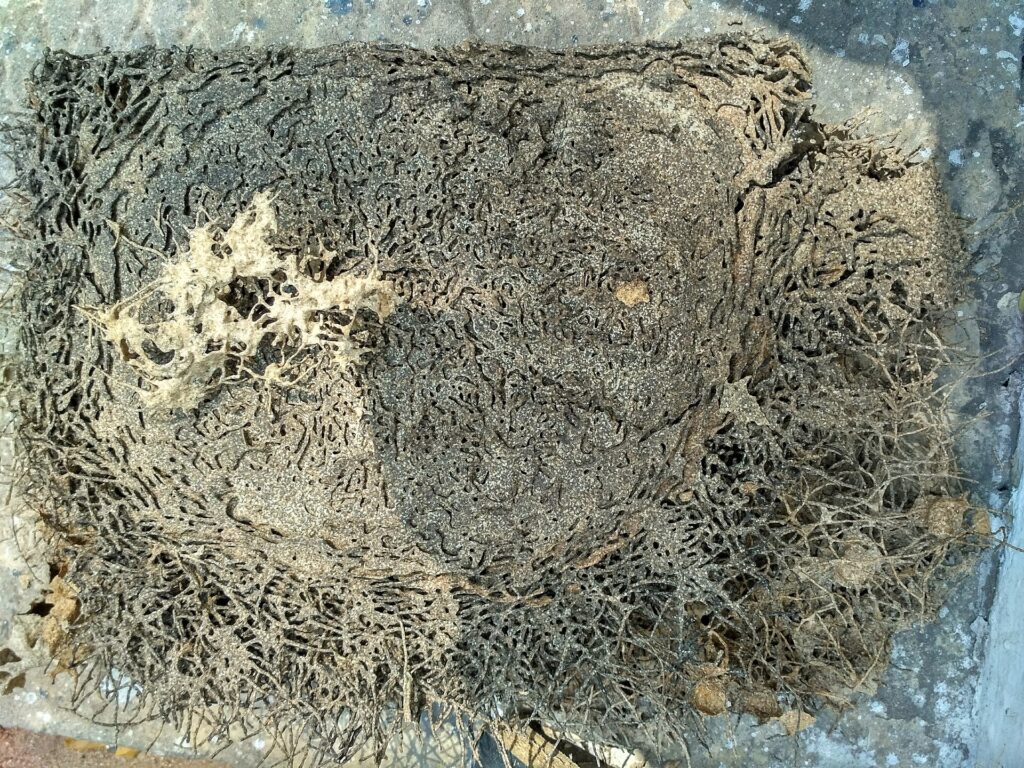
Featured photo: Termite damage on a block of wood by Pratishkhedekar, CC BY-SA 4.0, via Wikimedia Commons.
Tricia Garcia & Steve Hise
Senior Real Estate & Inherited Home Specialist
805-424-6226
team@RealEstateToolbox.com
leisurevillagelife.com | realestatetoolbox.com
Real Estate Toolbox | eXp Realty | DRE #02032007