

12 Home Upgrades That Hurt Resale Value (and What Buyers Want Instead)
By Tricia Garcia, Senior Real Estate & Inherited Home Specialist | Real Estate Toolbox, eXp Realty
THE SHORT ANSWER
Home upgrades hurt resale value when they add work, risk, or lost space for the next owner. The usual suspects: forever chores like koi ponds and aquariums, safety risks like spiral staircases and step-down rooms, and photo-friendly features that steal storage and flexibility.
Picture a couple in their late 60s walking through your open house. They’re smiling. They like what they see. Then they stop. Maybe it’s the spiral staircase, the koi pond out back, or the kitchen that looks stunning in photos but feels like an obstacle course in person. One of them says, almost under their breath, “Who is going to deal with this?” And the showing is over in their mind.
That’s how upgrades hurt resale value. Not because they’re ugly, but because they feel like work, risk, or someone else’s problem. The home upgrades that most often backfire fall into three groups: features that become forever chores, features that feel like a safety risk, and features that look great in photos but steal storage, flow, and flexibility.
I’m Tricia Garcia. For almost ten years I’ve helped seniors and families sell homes in Ventura and Los Angeles County, with a lot of my focus in Leisure Village and Camarillo. Sellers put real money and real love into these upgrades, and it still makes the home harder to sell. Here are the 12 I see most, plus a simple test to run before you spend a dollar.

Why Upgrades Backfire When You Sell
Sellers upgrade to feel proud and ready, and nobody expects it to hurt resale value. That makes sense. But buyers run different math. They’re not thinking about what you spent. They’re thinking, “What will I have to deal with?”
Buyers who are simplifying their lives ask that question even more sharply. They want easy, safe, and low maintenance. When something looks like a chore, they discount it. When something makes them picture a fall, they discount it or walk. And when a feature would have to be ripped out, they’re pricing the removal before they write an offer.
Upgrades That Become Forever Chores
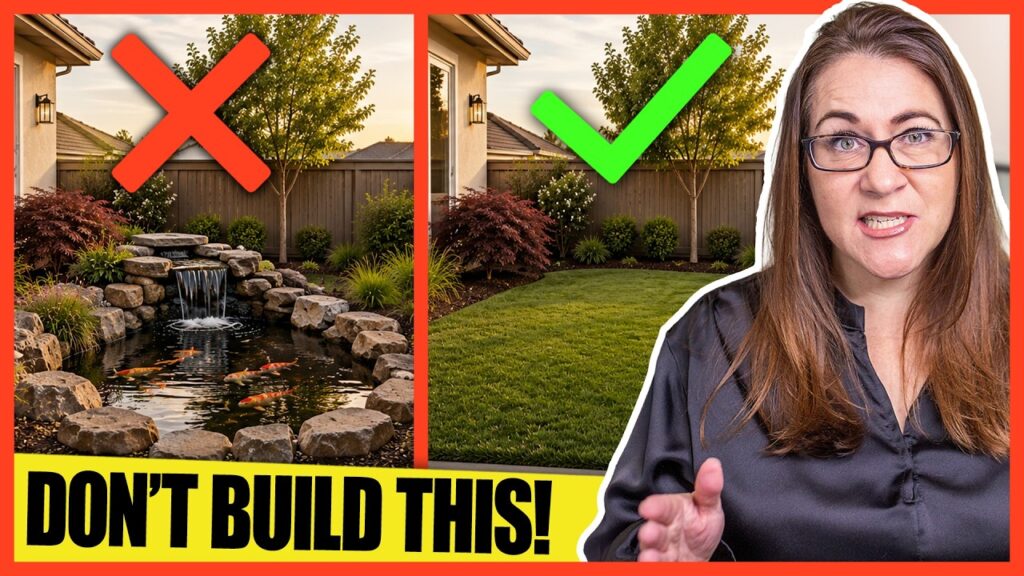
A koi pond
A koi pond looks peaceful, and for the person who built it, it is. A buyer sees pumps, filters, algae, a weekly routine, and a removal project they didn’t ask for. In my experience, buyers either price the removal in quietly or use it to negotiate the price down. Either way, it can hurt your resale value instead of helping it.
A built-in aquarium
Same idea, higher stakes, because it’s inside the house. The only buyer who sees one and thinks “great” already keeps fish. Everyone else sees plumbing, lighting, a cleaning schedule, and a hole in the wall to patch. If you have one, it may be worth removing and patching the wall before you list.
Skylights
More light sounds good to everyone. But many buyers hear “skylight” and think leaks, summer heat, and glass they can’t reach to clean. Once one leaks, it’s a repair call and a stress they didn’t sign up for. Skylights can work in the right home. Don’t add them hoping they’ll lift your price.
Murals and themed rooms
The underwater bedroom for the grandkids. The commissioned dining room mural you love every day. I get it. But the more personal the design, the faster a buyer reaches for a paint roller in their mind. They know what to do with plain walls. A mural makes them hesitate. Paint neutral before you list, every time.
Upgrades That Feel Like a Safety Risk
Buyers thinking about the next ten or twenty years aren’t only shopping for a house. They’re asking, “Can I age here? Can my spouse get around if things get harder?” According to the CDC, falls are the leading cause of injury for adults 65 and older, and about 1 in 4 report a fall each year. Buyers feel that risk when they walk a home.
A spiral staircase
At a showing not long ago, the buyers were engaged until we turned a corner and there it was: a spiral staircase up to the loft. The husband looked at it, looked at his wife, shook his head, and moved on. We never talked about the loft. Narrow treads, no real landing, and one bad step on a bad knee is an ER visit. Once a buyer sees a hazard, they want a price that covers a rebuild, or they move on.
Step-down rooms and surprise level changes
Sunken living rooms and unexpected steps between rooms were a real design trend. To a buyer with a cane, a walker, or sore knees, they’re a trip hazard. I call it a mobility tax. Buyers feel it even when they can’t name it, and they price it in. Talk with your agent about whether to flag, soften, or fix level changes before you list.
A freestanding soaking tub
They photograph like a luxury hotel. But the tub often takes over the room, and counter space and storage get squeezed around it. The practical question comes fast: can I get in and out of that safely? There’s no wall to grab and no ledge. If you’re updating a bathroom to sell, a clean, safe, walk-in-friendly shower is what these buyers look for.
Upgrades That Look Great in Photos but Steal Function
A built-in office that replaced a bedroom
When an office absorbs a bedroom or a closet, the next buyer sees fewer options: no guest room, no space for a caregiver, no hobby room. Buyers who know life changes value that flexibility. Keep a workspace if you need one, but don’t make it permanent in a way that removes a bedroom.
A kitchen with poor flow
I’ve watched buyers walk into a kitchen that looks stunning in photos, start moving around, and realize something feels off. Most of the time it’s the flow. Before you add an island or change the layout, walk it. Pretend you’re making dinner with someone else in the room. If it’s awkward for two people, buyers will feel it.
A waterfall island that loses storage
I love how they look. But a waterfall edge means no cabinets or drawers on that side. Many buyers have a lifetime of good dishes, pots, and heirlooms they’re not ready to part with, and undersized cabinets end the romance fast. If you want the look, choose a version that keeps the storage.
A dedicated movie room
For a true home theater fan, it’s a bonus. Many other buyers ask, “Could this be a bedroom, a den, or a guest room?” When the answer is no because of blackout walls, tiered seating, and a built-in screen, it starts to feel like dead square footage, and that can hurt resale value. If you have one, stage it as a flexible room.
Open concept taken too far
Open concept can work. But when every wall comes down, the whole house becomes an echo chamber. Many buyers want quiet, privacy, and a door they can close to rest, read, or take a call. Before you knock out a wall, think about the sound barrier you’re removing.

The Buyer Walk-Through Test
Before you spend a dollar on any upgrade that could hurt resale value, stand in the room and ask three questions:
- ✓Does this make daily life easier or harder? Think flow, storage, cleaning, and noise.
- ✓Does this add any risk? Think trips, falls, tight turns, anything that gets harder as life changes.
- ✓If the next owner doesn’t want it, how painful is it to undo? A weekend with a paint roller is one thing. A five-figure removal is another.
“The sellers who walk away with the most money aren’t always the ones who spent the most. They’re the ones who thought like a buyer first.”
Tricia Garcia
For the repairs families often overspend on, read Skip These 3 Repairs Before You List, and for issues that scare buyers off, see 10 Things That Scare Buyers Away From Your Home.
Frequently Asked Questions
What home upgrades hurt resale value?
The ones that add work, risk, or lost function for the next owner: koi ponds, built-in aquariums, skylights, themed rooms, spiral staircases, step-down rooms, freestanding tubs, offices that replaced a bedroom, awkward kitchen layouts, waterfall islands that lose storage, dedicated movie rooms, and open concept taken too far.
What devalues a house the most?
In my experience, anything a buyer sees as work, risk, or lost space: deferred maintenance, safety hazards like surprise steps, and upgrades they would have to pay to remove.
Does a koi pond add value to a home?
Rarely. In my experience, buyers see ongoing maintenance and a removal cost, and they either price that in or use it to negotiate.
Should I remove a built-in aquarium before selling?
It’s often worth it. A clean, patched wall is easier to sell than a feature most buyers don’t know what to do with.
Do skylights increase home value?
Don’t count on it. Many buyers worry about leaks, heat, and cleaning, so skylights can raise more questions than offers.
Is open concept still popular with buyers?
Open layouts still sell, but many buyers now want some separation for quiet and privacy. A home where every wall is gone can work against you.
Have Questions About Your Home?
Thinking about selling in Leisure Village?
Have questions, real ones, specific ones? Reach out to my team and me directly. If you’re getting ready to sell in Leisure Village, Camarillo, or anywhere in Ventura or Los Angeles County, book a free 30-minute call and we’ll walk your home together before you spend a dollar.
Tricia Garcia & Steve Hise
Senior Real Estate & Inherited Home Specialist
805-424-6226
team@RealEstateToolbox.com
leisurevillagelife.com | realestatetoolbox.com
Real Estate Toolbox | eXp Realty | DRE #02032007